Cooperative Roots, Community Impact: Manna’s Expansion in Rural Minnesota
With support from Reinvestment Fund, Manna Food Cooperative is building a sustainable, community-owned grocery and meeting critical food access needs.
“In this day and age, independent businesses on Main Street in rural America are a dying breed. The fact that we’re a cooperative, owned by member families, really animates all of us. We’re building something together,” explains Ryan Pesch, co-general manager of Manna Food Cooperative, a community-owned and operated retail storefront and deli focused on local, natural, and organic foods located in Detroit Lakes, Minnesota.
The availability of fresh food is crucial in Detroit Lakes, a town of approximately 10,000 residents, which is classified by the U.S. Department of Agriculture (USDA) as a food desert, or an area with limited access to healthy food and a high poverty rate. In 2017, a group of local farmers, including Pesch, his wife, Maree, and Wendy Gordon, a registered dietitian, came together to create Manna Food Cooperative. The group had a shared vision to provide local producers with a year-round outlet while fostering a positive impact on community health.
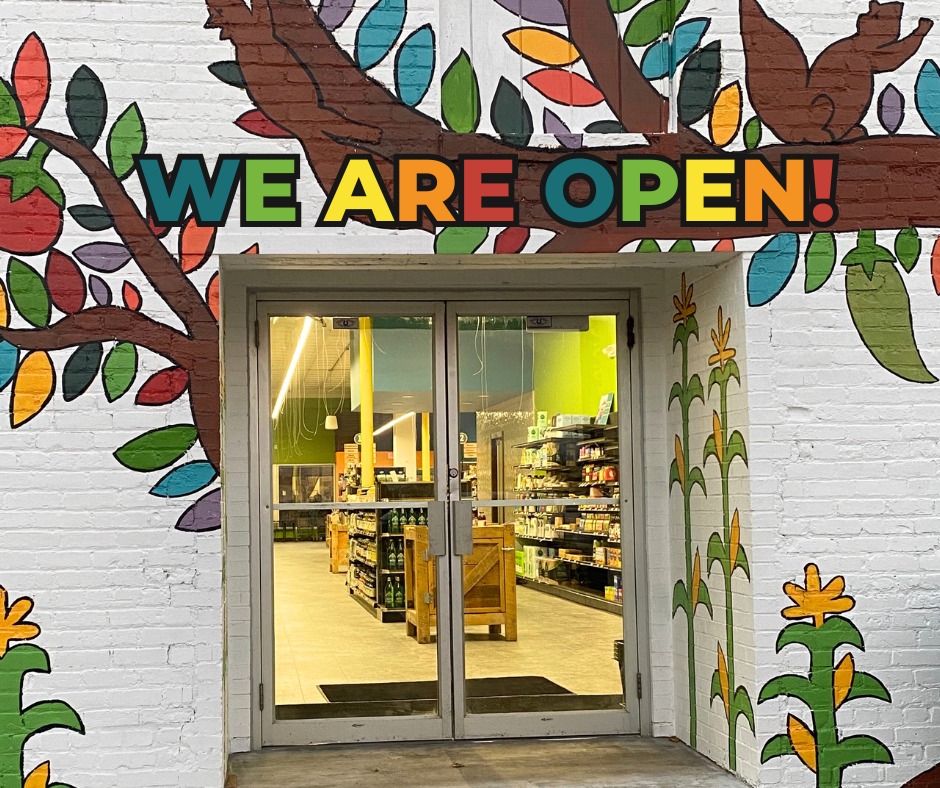
Manna Food Co-op operates a vibrant retail storefront in downtown Detroit Lakes and has served the community since 2016.
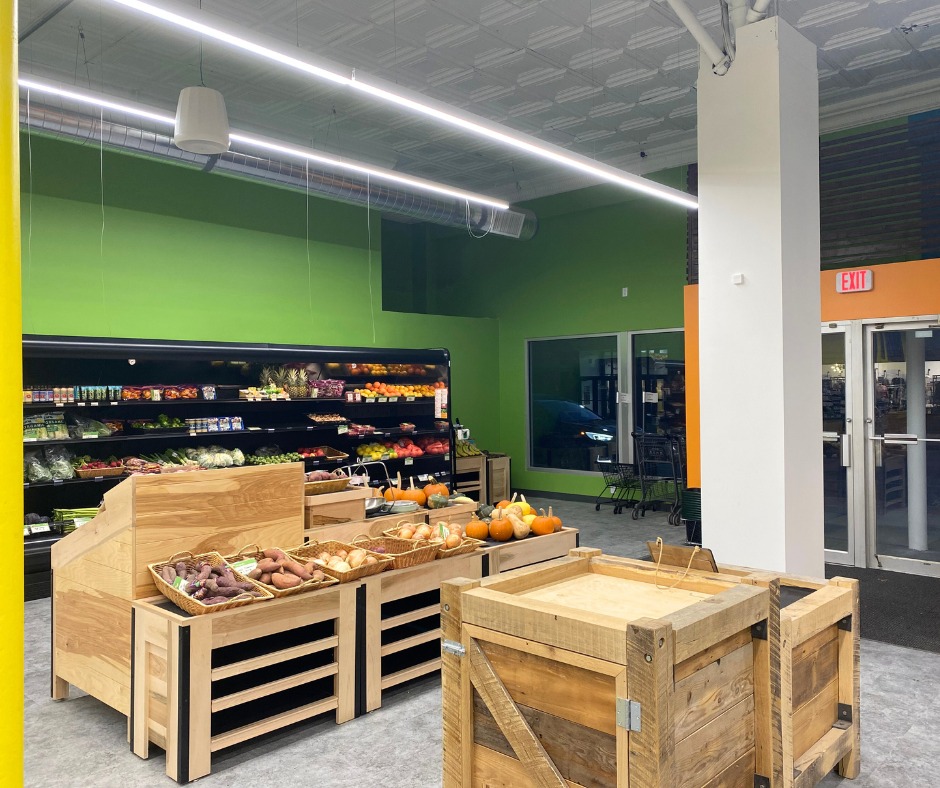
The co-op had a shared vision to provide local producers with a year-round outlet.
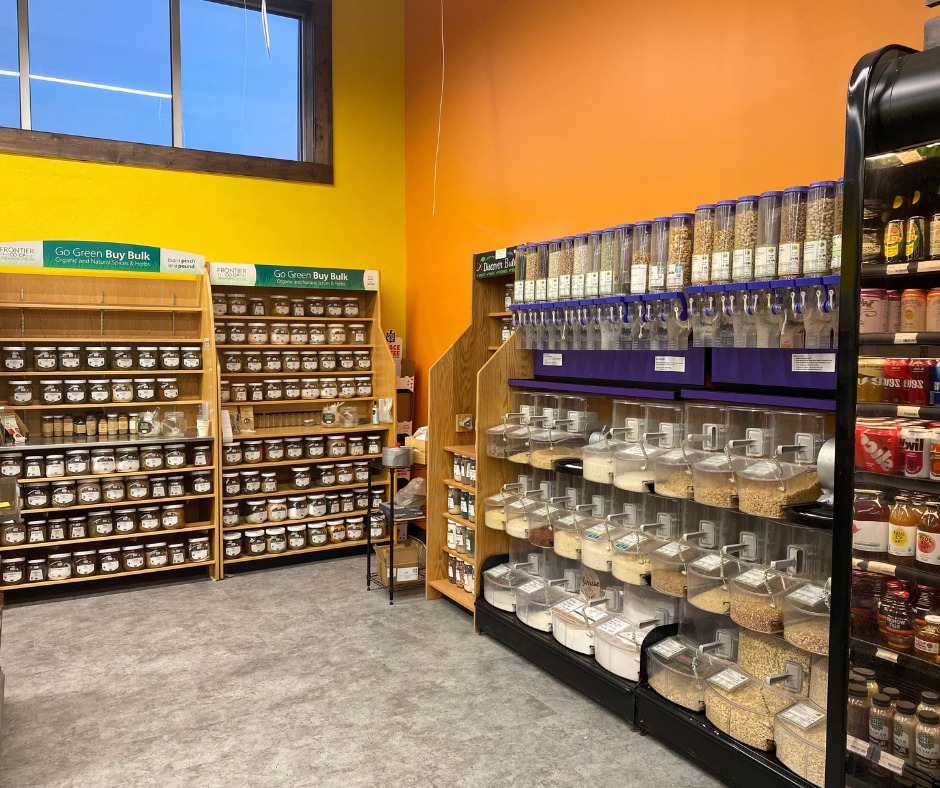
Manna now has over 1200 co-op owners made up of local families.
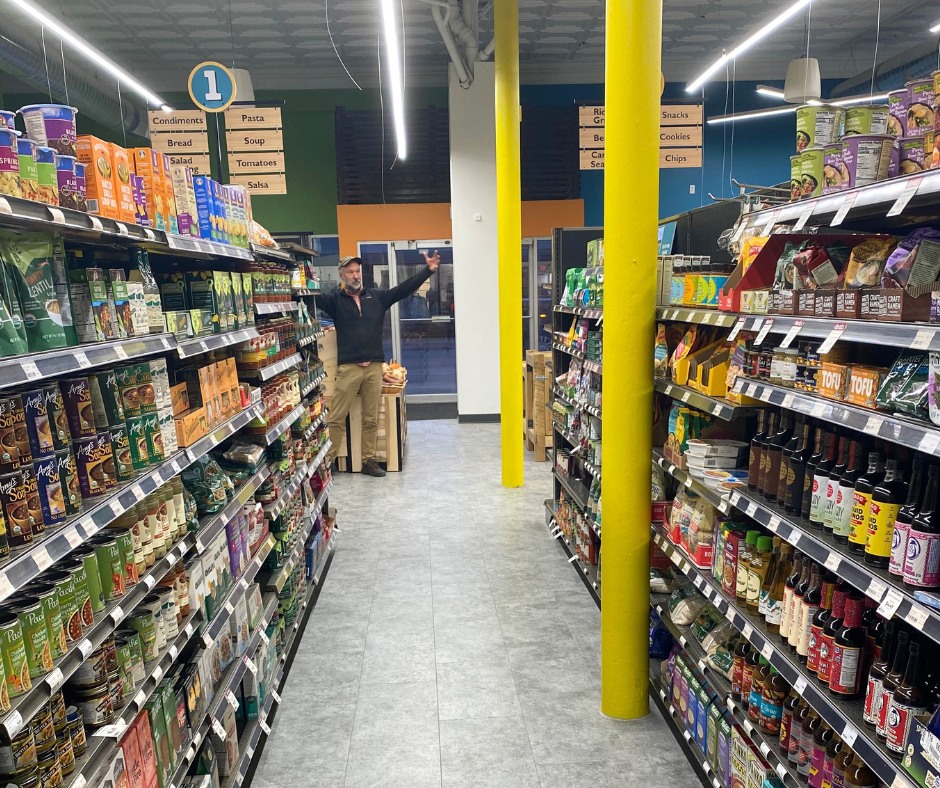
Over 25% of Manna’s store inventory is sourced from 50+ local suppliers, many of whom are also co-op members.
Pesch played a significant role at the helm, helping grow the co-op to over 1,200 member-owners, no minor feat in this small town. Along with promoting health and building a sustainable food system, it also supports the local economy in the area. Over 25% of store inventory is sourced from 50+ local suppliers, many of whom are also co-op members. The project also bolsters tribal communities by serving and sourcing from members of the White Earth Nation, Minnesota’s largest Native American reservation.
“Growing up in Northern Minnesota, I understand the economic challenges in rural America. Food and agriculture have always been a key component in these regional communities, and it’s very inspiring to help build up this traditional industry and fill up the empty main street,” says Pesch.
As the co-op gained traction with the local community through the years, it has also needed to expand several times. A couple years ago, Pesch and his fellow board members found a vacant 100-year-old building in the Detroit Lakes’ traditional downtown that had sat empty for over a decade and began exploring acquisition options.
“I personally acquired the building to make it happen. Then, part of my due diligence was to look around and see if there were other funding opportunities. Then I came across Reinvestment Fund,” recalls Pesch.
The acquisition, renovation, and working capital for the new 12,000-square-foot site are possible through a $1 million loan from Reinvestment Fund via the Healthy Food Financing Initiative’s Food Access and Retail Expansion Fund (FARE Fund). In addition to the loan, Reinvestment Fund also provided a grant through the FARE Fund to support the project’s early development. Reinvestment Fund is a mission-driven financial institution that partners with USDA on programs such as the FARE Fund to invest in projects that help increase healthy food access in underserved areas.
The new location will help restore vibrancy to the downtown Detroit Lakes area while retaining its historical footprint.
I personally acquired the building to make it happen. Then, part of my due diligence was to look around and see if there were other funding opportunities. Then I came across Reinvestment Fund
Ryan Pesch, Co-General Manager of Manna Food Cooperative
The co-op’s new space will also include a community kitchen for shared use and light food processing such as pickling and jam-making, an expanded deli and café for prepared meals and sit-down options in the grocery store. The café, kitchen rentals, and potentially other leased spaces also serve as a type of diversified revenue stream. There will also be a hydroponic produce station to grow greens year-round without soil.
“We had a collaboration with the Boys and Girls Club during the pandemic called Gardens to Grow, which was fun, and they did hydroponic growing at home and at their facility. But now this new space will allow us to be more involved and turn the project into a youth entrepreneurship initiative that uses hydroponics to grow produce for sale and food shelf donation,” remarks Pesch.
This latest expansion is also financed through the USDA Resilient Food Systems Infrastructure (RFSI) Grant, a capital campaign driven by co-op members, and various state and local grants that have been generously made available.
The team at Reinvestment Fund also provides technical assistance to support project planning and financial sustainability. This ensures that the project remains a co-op-led effort and locally rooted food retail with national relevance through the USDA partnerships. As a high-impact, catalytic investment, the co-op drives economic revitalization by restoring a vacant building into essential infrastructure, such as a kitchen and café, while improving food security in an underserved rural community.
Pesch and team have empowered local farmers and tribal citizens through integrated supply chains and cooperative ownership. This project is a successful example of a replicable, locally rooted model for food retail with potential nationwide impact and applicability.
“We’re only successful because we’re grassroots and scrappy, but that’s the point about the culture of the co-op. We have a can-do attitude and are willing to put in our time to make it happen,” points out Pesch.