Where Home Becomes Possible: Permanent Supportive Housing on the Atlanta BeltLine
On a corner of the Atlanta BeltLine, where rising rents had pushed out the residents with the fewest options, 42 new homes now offer something the neighborhood had stopped providing: a stable, permanent place to live. The story of 111 Moreland is one of partnership, persistence, and a shared belief that a changing Atlanta should still have room for everyone.
Reynoldstown sits along the Atlanta BeltLine, the park and trail loop that has reshaped the city over the past decade. The same investment that turned the neighborhood into a destination also accelerated displacement. Longtime residents were priced out as the area filled with new luxury housing, and many of those with the fewest resources lost their footing entirely. It was here, at 111 Moreland Avenue, that 42 micro-units of permanent supportive housing opened for people working to reestablish a stable place of their own.
“The BeltLine supercharged displacement,” says Stan Sugarman, co-founder at Stryant Construction & Management (Stryant), the project’s developer. “In a neighborhood that had seen very little long-term homelessness, the numbers climbed from 20 or 30 people to around 300. It was almost entirely due to the cost of housing.”
A DEVELOPER WHO REFUSED TO WALK AWAY
Stryant, led by Sugarman and his partner Atticus LeBlanc, is an Atlanta developer with a long record in housing rehabilitation and neighborhood stabilization. The 111 Moreland site had been a stalled condominium project, and before that, a motel that had become a housing of last resort. Stryant had already completed two similar conversions in partnership with Partners for Home, Atlanta’s continuum of care, and saw the site as a chance to bring deeply affordable, service-enriched housing to a high-opportunity location: a short walk to the BeltLine, near MARTA rail, grocery stores, and jobs.
The model serves residents earning roughly 30% of the area’s median income, many of them young adults and most identifying as women, who are working to reestablish stability after years without a place of their own. Stryant runs the building with an on-site property management team and around-the-clock support, pairing housing with the services that help residents stay rooted for the long term.
What did not waver was support from the City of Atlanta, where leaders frequently describe addressing housing needs as a group project.
WHAT IT TOOK TO MAKE THE MATH WORK
Deeply affordable, service-enriched housing rarely works with conventional financing alone. Supporting residents as they regain a stable footing adds operational complexity and calls for both wraparound services and deep subsidies. The roughly $6.4 million project also drew significant neighborhood opposition. What did not waver was support from the City of Atlanta, where leaders frequently describe addressing housing needs as a group project.
For Sara Haas, vice president of lending at the Atlanta Neighborhood Development Partnership (ANDP) and the deal’s lead lender, the difficulty was part of the point. “Bringing deep, permanent affordability to a neighborhood under that much development pressure was a rare opportunity, one you wouldn’t want to pass up,” she says. “We also wanted to show it could be done, that well-operated permanent supportive housing can be a value add to a community.”
CAPITAL THAT CLOSED THE GAP
Making the numbers work meant layering many sources of capital and subsidy. As a member of the Federal Home Loan Bank of Atlanta, ANDP sponsored an application that secured a $750,000 Affordable Housing Program grant, and it committed Capital Magnet Fund dollars as low-cost, long-term debt. The City of Atlanta, Atlanta Housing, Invest Atlanta, the Community Foundation for Greater Atlanta, and Partners for Home each brought capital or services to the table.
ANDP originated and serviced the construction loan as the project’s lead lender, and Reinvestment Fund joined as a participant, taking on a share of the construction risk so that more capital could reach the project. For Reinvestment Fund, standing behind a local partner and a determined developer on a project this ambitious reflects a longer commitment to Atlanta, and to community development that conventional financing too often overlooks.
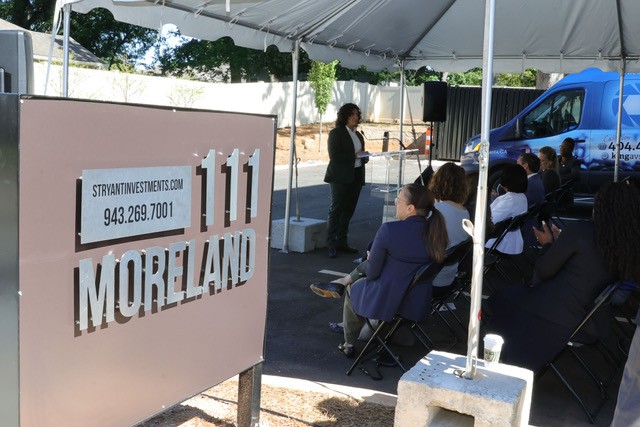
Behind 111 Moreland is a partnership that has been deepening in Atlanta for more than a decade.
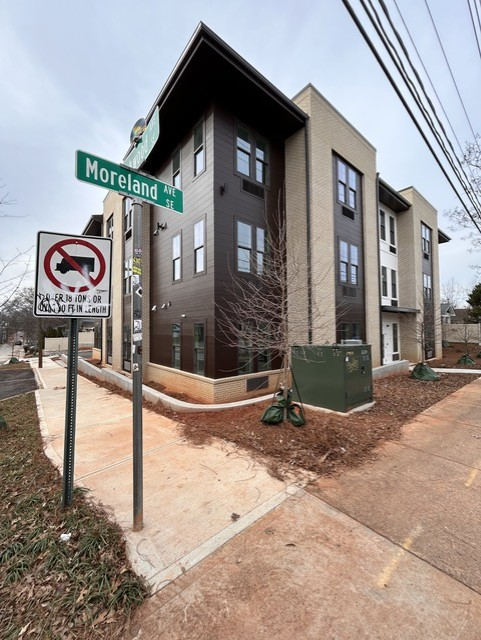
The deeply affordable, service-enriched housing is located in a high-opportunity location: a short walk to the BeltLine, near MARTA rail, grocery stores, and jobs.
A SHARED COMMITMENT TO ATLANTA
Behind 111 Moreland is a partnership that has been deepening in Atlanta for more than a decade. Reinvestment Fund and ANDP began working together around 2014, pairing ANDP’s deep local relationships with Reinvestment Fund’s capital and underwriting capacity. Year after year, the two organizations have aligned on the same question: what does this neighborhood and this city most need? That shared commitment to Atlanta is part of what allows a project as complex as 111 Moreland to move forward.
“It is not just the nuts and bolts of underwriting and closing a deal,” Haas says. “It is about what the priorities are in this market, what matters to Reinvestment Fund and to ANDP, and how we come together on them. We work hand in hand.”
THE FOUNDATION FOR EVERYTHING ELSE
For the residents of 111 Moreland, the building is more than an address. Many arrived after years of housing instability, moving between temporary places to stay and often unsure of where they would sleep from one night to the next. Stable housing, Sugarman notes, changes what becomes possible. “When you have been without a place of your own for years, a door that locks and a place that is yours is not a small thing,” he says. “It is the foundation for everything else.” Stable housing also improves health outcomes and reduces the public costs borne by emergency rooms and jails when people have nowhere to live.
It can strengthen a neighborhood, too. In a city where many residents move every few years, Sugarman sees stable, long-term residents as part of what holds a community together.
A MODEL BUILT ON PARTNERSHIP
Both Sugarman and Haas return to the same word for how 111 Moreland came together. “Affordable housing really gets built through partnership,” Haas says. “It took Stan’s vision and diligence, it took the public sector, it took service providers, and it took CDFIs willing to navigate the complexity. It took all of those partners to bring this property to life.” For 42 residents at 111 Moreland, that partnership became home. Yet homelessness persists in Reynoldstown, a reminder that one building, however well-built, is part of a larger challenge. What 111 Moreland demonstrates, though, is a model that works—and a partnership committed to replicating it. Stryant, ANDP, and Reinvestment Fund are pursuing similar projects in Atlanta and beyond, turning what worked at 111 Moreland into a repeatable approach. For Reinvestment Fund, the project is evidence of what mission-driven capital can unlock when local partners align around a shared goal, and a commitment to deepen that work in Atlanta’s neighborhoods and across the markets it serves.
Photo Credit: Jena Jones of Atlanta Housing