Investing with Purpose: How Local and National Partners Are Expanding Opportunity in Baltimore
In Baltimore, where decades of disinvestment have both created challenges and steeled community resilience, capital alone is not enough. What matters is where it goes, how it is structured, and who it empowers.
The Neighborhood Impact Investment Fund (NIIF) was created with that understanding at its core. Launched by the City of Baltimore in 2019, NIIF was designed to focus on neighborhoods that traditional capital has historically bypassed and to deploy flexible financing that responds directly to community priorities.
In just a few years, that approach has translated into nearly $100 million in committed capital and more than $450 million in total investment catalyzed across the city. It is a clear example of what becomes possible when capital is both targeted and collaborative.
But in a city as layered and complex as Baltimore, even a focused, place-based model cannot operate in isolation.
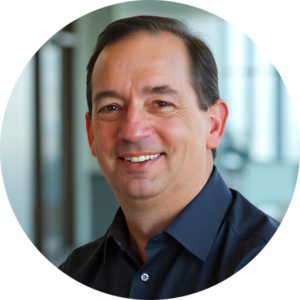 “We don’t try to prescribe what a neighborhood needs,” shared Mark Kaufman, Chief Executive Officer of NIIF.
“Communities tell us. Our role is to listen and support that vision.”
This philosophy reflects a broader shift in Baltimore’s development approach. For decades, investment strategies centered on downtown growth. Today, the focus has turned toward neighborhoods, recognizing that lasting change must begin where people live.
That shift is visible in the breadth of NIIF’s work. Across housing, community facilities, small business, and mixed-use development, the organization has deployed capital in ways that reflect the diverse needs of Baltimore’s neighborhoods. As of 2025, NIIF had completed 58 transactions, supporting projects that create jobs, preserve housing, and strengthen local economies.
In the past year alone, NIIF deployed more than $20 million in new loans. These investments support affordable homeownership, workforce development, healthcare access, and other community priorities. More than half of NIIF-supported projects involve minority-led or controlled organizations, reinforcing its commitment to equitable development.
At the same time, the scale and complexity of many projects require more than local knowledge. They require layered capital, specialized expertise, and the ability to navigate complex financing structures.
This is where national partners like Reinvestment Fund play an important role.
Over the past 25 years, Reinvestment Fund has brought a national balance sheet, flexible capital, and sector expertise into Baltimore. Since 2013, that work has helped finance more than $259 million in projects, reaching over 116,000 residents across the City.
[Reinvestment Fund] brings a proven track record at scale, while we contribute deep local relationships. Together, we make the deal possible.
Ryan Rattanni, Chief Operating Officer, The Neighborhood Impact Investment Fund
The relationship between NIIF and Reinvestment Fund is not transactional. It is built on collaboration.
From the beginning, NIIF has taken a partnership-first approach. This reflects a belief that collaboration leads to stronger outcomes. Nearly half of its investments since inception have been made in partnership with other CDFIs, and Reinvestment Fund has been the most frequent partner.
NIIF contributes local knowledge, relationships with public agencies, and a deep understanding of Baltimore’s policy environment. National partners contribute scale, access to capital, and specialized expertise across sectors.
“If we’re financing a charter school or a grocery store, we turn to Reinvestment Fund,” said Ryan Rattanni, Chief Operating Officer at NIIF. “They bring a proven track record at scale, while we contribute deep local relationships. Together, we make the deal possible.”
This alignment is especially important in Baltimore, where many projects depend on layered funding sources. Public subsidies, tax credits, and private capital must come together to make projects viable.
In this environment, partnership is essential.
By working together, NIIF and Reinvestment Fund share risk, expand capital availability, and provide greater flexibility to borrowers. They also coordinate underwriting, share due diligence, and align on execution to reduce friction for developers and community organizations.
Projects like the Southern Streams Health and Wellness Center in East Baltimore show what this model can achieve. The $32 million development will provide healthcare services, workforce training, and community-based support in an underserved neighborhood.
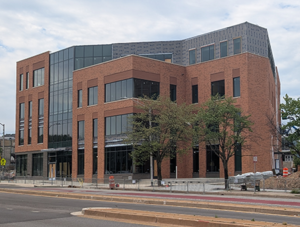 Housing investments across the city tell a similar story. From revitalizing blocks in Barclay to creating new homeownership opportunities in Druid Heights, these projects help stabilize neighborhoods and create pathways for long-term economic mobility.
For NIIF, the goal is not to dominate the market. It is to expand it. The focus is on bringing more mission-driven capital into Baltimore and enabling more partners to contribute.
“We want CDFIs to do more in Baltimore,” Rattanni emphasized.
For Reinvestment Fund, this aligns with its role as a national CDFI. Its success is measured by how well it supports local leaders, structures complex transactions, and aligns capital with community priorities.
What makes this partnership effective is a shared commitment to the work.
Both organizations understand that progress in Baltimore requires patience, trust, and long-term presence. It requires listening to communities, maintaining relationships, and staying engaged through challenges.
It also requires recognizing that no single institution can shape a city’s future alone.
That future will be built through partnership.
As Baltimore continues to evolve, the collaboration between NIIF and Reinvestment Fund offers a model for community development that is both practical and scalable. It is locally grounded, supported by national resources, and driven by the needs of the communities it serves.
Because building thriving neighborhoods is not just about capital.
It is about commitment.