Built to Last: How Kresge Is Helping HBCUs Prepare for Growth
 Dr. Ashley Johnson-Varner, The Kresge Foundation
When Dr. Ashley Johnson-Varner measures what a college degree can do, she starts with three generations of her own family. “When I look at my daughter’s life today compared to my own childhood, and compared to my mother’s experience, the difference is profound,” said Dr. Johnson-Varner, a program officer at The Kresge Foundation and a first-generation college graduate. “College gave me a pathway from economic insecurity toward stability and the possibility of building generational wealth.”
Historically Black Colleges and Universities (HBCUs) have been building that pathway for more than a century, and the record is well documented. A 2022 presidential proclamation found that 70 percent of Black doctors and 80 percent of Black judges attended an HBCU. Research from the UNCF found that more than half of HBCU students come from families in the bottom 40 percent of household income, more than double the national rate, and that HBCUs move students up the income ladder at more than twice the national rate. More than 70 percent of HBCU students are Pell Grant-eligible.
“HBCUs meet students where they are and help them realize what is possible,” Dr. Johnson-Varner said. “Many students arrive having been told, directly or indirectly, that they are not college material. HBCUs help them recognize their brilliance.”
Demand Is Outpacing the Campus
Students and families have noticed. In fall 2025, Fayetteville State University set an all-time enrollment high for the fourth consecutive year, North Carolina A&T State University passed 15,000 students, and Alabama A&M University enrolled a record 2,157 first-year students, according to The Journal of Blacks in Higher Education. The financial footprint is just as large. UNCF’s 2024 economic impact report found that HBCUs generate $16.5 billion in economic impact and support 136,048 jobs, with 1.5 off-campus jobs for every job on campus.
“Students and families are increasingly focused on value, and HBCUs are delivering,” Dr. Johnson-Varner said. “But success is creating new challenges. Demand is growing faster than the physical capacity of many campuses. An institution cannot welcome more students without the residence halls, classrooms, labs, and student spaces needed to support them.”
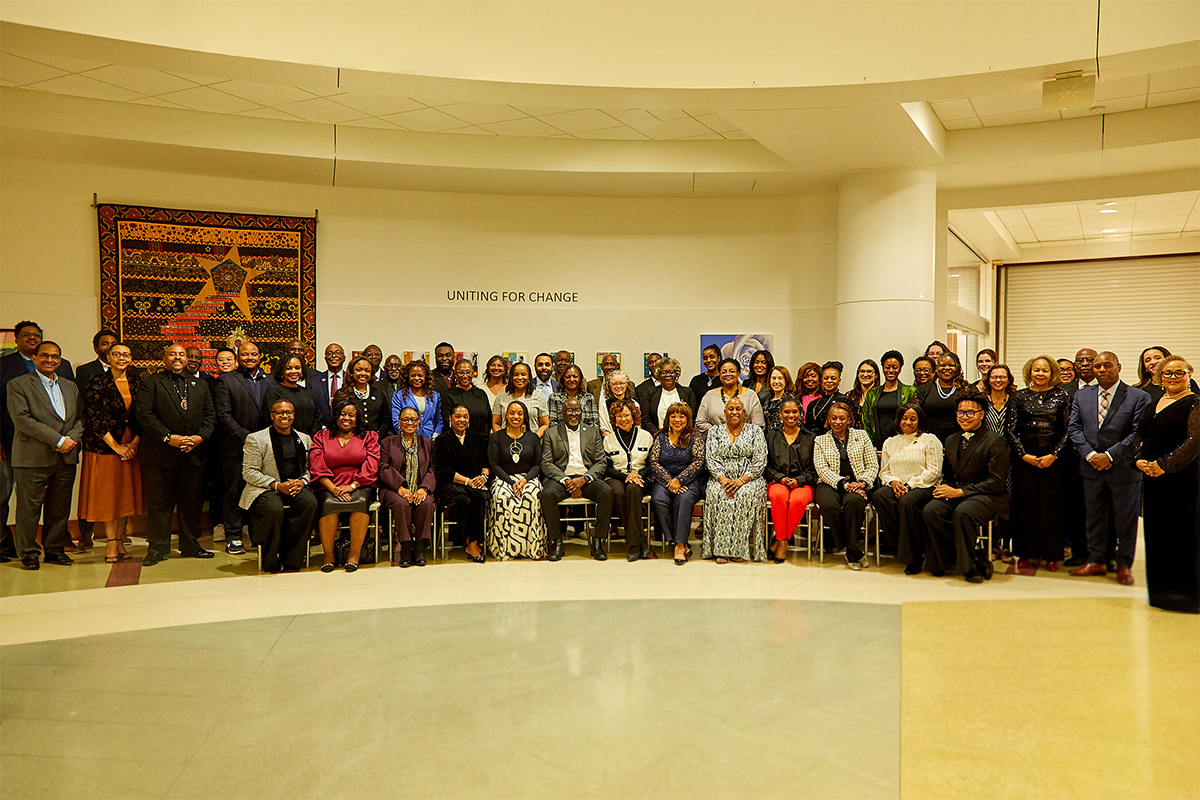
Reinvestment Fund’s HBCU Brilliance Initiative Cohort brought together 10 Historically Black Colleges and Universities (HBCUs) from across the country for a comprehensive capacity-building experience that combined grant funding, technical assistance, leadership development, and peer learning to support institutional growth and long-term sustainability.
That capacity gap has a long history. HBCUs responding to a 2018 U.S. Government Accountability Office survey reported that 46 percent of their building space, on average, needed repair or replacement. In 2023, the U.S. Secretaries of Education and Agriculture wrote to 16 governors that their states had underfunded land-grant HBCUs by more than $13 billion over roughly three decades. Endowments tell a similar story: The Century Foundation found that private HBCUs hold about $25,000 in endowment per student, compared with more than $184,000 at other private institutions. Even borrowing costs more. A study in the Journal of Financial Economics found that HBCUs with the same credit ratings as other colleges paid roughly 20 percent more in underwriting fees to issue bonds.
How Capital Reads Risk
Dr. Johnson-Varner is forthright about what those numbers mean. Deferred maintenance and thin balance sheets, she said, “reflect decades of documented intentional underinvestment by government and philanthropy, not institutional weakness.” How investors read that history determines the terms HBCUs receive. “Capital follows the story people tell about risk,” she said. “If the narrative is fragility, the capital that shows up is small, short-term and restrictive. If the narrative reflects what HBCUs actually are, the terms change.” HBCUs own land, buildings, and brands with generations of loyalty behind them. “Due diligence that sees the difference prices risk more accurately.” A recent Stanford Social Innovation Review essay made a similar case, calling for HBCUs to move from survival to sovereignty and pointing to the HBCU Brilliance Initiative as a model for flexible capital.
Grants and Loans, Working Together
Kresge has held that view since May 1945, when the foundation made its first grant to the newly formed UNCF. It has since made more than 60 grants to HBCUs totaling more than $75 million, first for campus facilities and later for institutional capacity, including seed funding for UNCF’s Institute for Capacity Building. With federal funding less predictable and enrollment pressure building across higher education, Dr. Johnson-Varner sees staying power as the point. “Markets read retreat as a signal,” she said. “When investors pull back from a sector, it reinforces a perception of risk that raises the cost of capital for everyone in it. When capital stays, it sends the opposite signal.”
The tools have changed. Kresge’s Education Program and Social Investment Practice made a joint commitment to Reinvestment Fund’s HBCU Brilliance Initiative: $1,162,500 in grants, paired with a $3.75 million program-related investment. A community development financial institution (CDFI) such as Reinvestment Fund, which has loaned more than $60 million to HBCUs since 2018, “can take on risk a bank won’t price and pair capital with hands-on technical assistance a foundation isn’t structured to provide,” Dr. Johnson-Varner said. “A loan without the grant risks sitting idle, because institutions aren’t yet positioned to borrow. A grant without the loan builds readiness with nowhere to go.”
The order of that support is important. Over eight months, the inaugural cohort completed more than 14,000 hours of capacity building, and each institution received a $40,000 predevelopment grant before becoming eligible to apply for up to $1 million in financing. Predevelopment is the hardest money to find because it is spent before anyone knows whether a project will pencil out. When ten institutions completed the program in July 2026, Dr. Johnson-Varner noted that several had identified individual capital projects without yet having a comprehensive campus plan. The cohort gave them room to see how each project fits a larger vision. “When a CFO and board can speak a lender’s language and present a project with confidence,” she said, “the institution negotiates from strength.”
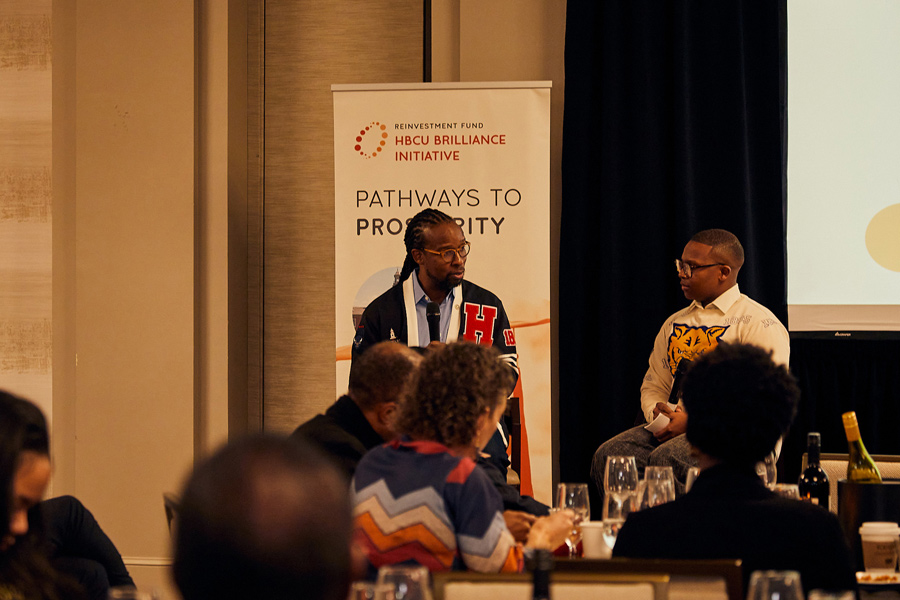
Dr. Kendi X. Ibram, Professor of History and founding director of the Institute for Advanced Study at Howard University, served as key advisors for the HBCU Brilliance Initiative Cohort program and advised participants throughout the duration of the program.
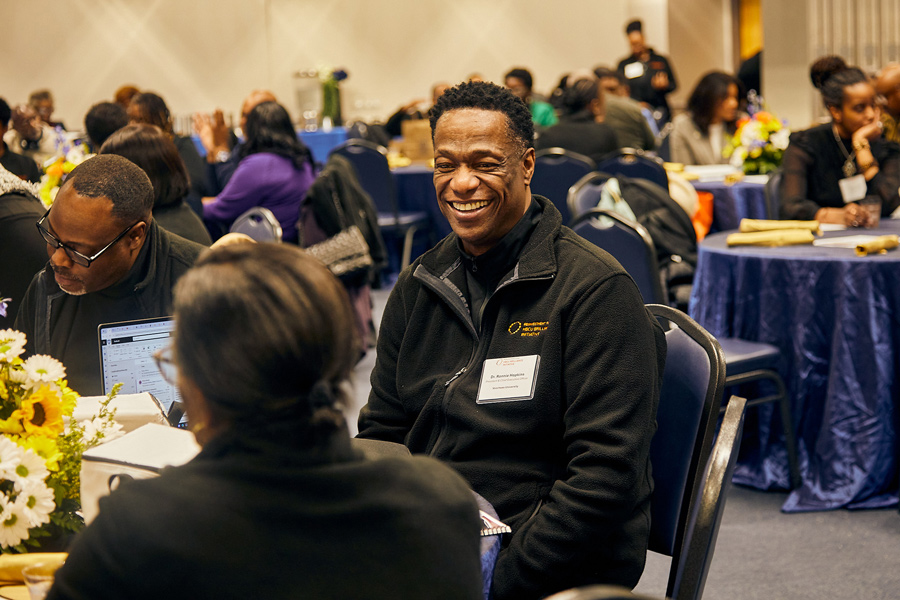
Dr. Ronnie Hopkins, President and CEO at Voorhees University, converses during a Cohort convening.
Beyond the Campus Edge
The returns reach well past the campus edge. Many HBCUs sit in rural towns and urban neighborhoods that have experienced decades of disinvestment, where the college is among the largest employers and property owners. A construction project brings contracts to local firms. A modernized facility can host health services, workforce training, and small business programming. Underused land can become housing or retail for the surrounding neighborhood. “For funders, that’s the case for viewing HBCUs through a community development lens, not only an education lens,” she said.
Her message to foundations and banks that believe in HBCUs but have not yet committed capital is that the infrastructure already exists. “Reinvestment Fund has done the underwriting, built the technical assistance, and assembled the cohort,” she said. Funders can participate through predevelopment grants, guarantees, program-related investments, or deposits. What turns one investment into a lasting commitment is structure: multiyear capital, a standing pool that recycles as loans are repaid, shared reporting, and a pipeline that extends past the first cohort.
Reinvestment Fund has described the HBCU Brilliance Initiative as a first step, not the only source of support. For Dr. Johnson-Varner, the measure of success is the one she knows from her own family: what a degree makes possible for a daughter, and for the generations after her. HBCUs have produced that outcome for more than a century with less than they were owed. The capital that stays with them now, from Kresge and from the partners who join at Reinvestment Fund’s HBCU portal, will determine how many more families get to see it.